

Why the cinema is dying and how we can fix it.

The problem
Whether you're an A-list studio with the greatest talent on planet Earth or a scrappy indie with an underdog production, the resounding question is the same for most of us... How the hell are we going to make money these days for our crew, our cast, our funders, our investors and, god willing, ourselves.

The glory days of weekly cinema sell outs on the backs of Star Wars, E.T., The Lion King, etc. are over. Sure we get glimmers with things like Barbenheimer (Barbie - Oppenheimer box office weekend) , or James Cameron's Avatar series, but these are anomalies in a great sea of floundering box office efforts that aim to rekindle the winning financial engine that was the box office.
Today, as filmmakers, there are only a few options to access the masses with our films. Either we breakout at a festival (even that's not working like it used too), we land a risky theatrical window, we go straight to DVD (yeah, DVDs are still a thing in most places around the world), we bite the bullet and land an often less than fair streaming deal that strips your rights while putting a lot of money in the streamers' pockets and not so much in the actual filmmaker's pocket, or we go it alone and release it on our website, YouTube, independent theatre tours, etc. with every finger, toe and neuron crossed in prayer.
But it wasn't always this way.
How it was
I think most of us will agree that cinema is the grandchild of live theatre. Similar pieces, but a different machine. Still when cinema first hit the scene the decorum and social experience of theatre and film were nearly identical. Then came the studio era that we see sputtering today.
The studio driven cinema we grew up with is all but entirely gone. Starting around the 1980s film marketing and the box office itself began to evolve to accommodate a younger, more family based audience. More animations, more young stories. It makes sense, if you can get the whole family out to the cinema that's more snacks, more butts in seats, less cash spent on babysitting and more bills flowing into the wallets of the studio heads. Not to mention, the earlier you can sink a brand hook in a human the longer your money making arc is.
How do I know that? Because... Until I die I will be watching the Teenage Mutant Ninja Turtles. That's just how it is.
Studios knew this and began to leverage young minds against their parents to pressure the purchase of action figures, dolls, Lego, memorabilia, etc. Pixar, Disney, Dreamworks, etc.... they all did it.
The commodification of attention evolved here.
The world was a different place though. No internet, no streaming, no social media.
The only place you would ever see these films, characters and stories was on a big screen the week/month they were released (if you're lucky) or 1 - 2 years later on a VCR cassette or TV re-run. If you missed the release in theatres, too bad, you had to suffer through the social embarrassment of not having anything to say about the latest Batman film for the foreseeable future. There was a social currency (a value) to having attended the cinema at that unique time. You were a little cooler, a little more informed, a touch more socially relevant... at least that was the sentiment.
The 90s saw much of the same. The internet existed but not like it does today. There were few users and even fewer who knew what it even was. Video on the internet was absent or weak at best. Streamers were a long ways out still but studios were getting better at making everyone spend more at the theatre. They added fun zones, mini golf, air hockey, arcades and more to add as much "value" to the experience as possible and extracting as much money as they could while they had you and your family captive at the cinema. Drinks got bigger, snacks got bigger, film IPs started making popcorn buckets and soda cups. The studios clearly thought that more is better. More things means more value, means more money for the execs.
What it's become
Somewhere around the mid to late 1990s a great hypnosis gripped the executive branch of the studio system. One where executives started to equate their financial success with the activity of "more," "bigger," "brighter," "faster," "louder." You can see this now in every major cinema around the world. Sometimes it's hard to know if you're in a casino or a cinema. Arcade lights, redeemable tickets, prizes, bleeps, boops, candy, alcohol, a full steak dinner, premium massage chairs - consume, consume, consume!! More, more more.
"More" became the answer to nearly every box office budgetary concern but the problem with more is that eventually you run out of more. The other problem with this particular "more" is that it wasn't a better more. It was an emptying "more." A more that stripped the very value and meaning that brought people to the cinema in the first place. Especially when a slicker, cheaper and easier new player arrived on the scene, Streamers.
Are streamers the reason cinema is dying?
Filmmakers, actors, executives and box office warriors are all quick to discuss the threat that streaming is having on cinema attendance. For good reason too. It's cheaper, more accessible, generally more comfortable and with the added ease of being able to pause, rewind, jump ahead, leave and return at your leisure and not miss a frame.
Snacks and drinks at the grocery and liquor store are a quarter the price of the cinema; blankets, reclining lazy-boys, convenience - the benefits of staying home are vast. Sounds like an easy decision, right? Because it is. Which is why so many cinema champions are nervous about this new threat on the media scene.
It seems the only thing that is better at the movies is the size of the screen and the spectacle of the atmospheric sound design, maybe toss in the odd 3D goggle experience (which is also available at home through traditional 3D or emerging VR experiences). So why go to the cinema at all?
What "value" does going to the cinema really give an audience member rather than staying at home. Any? The current model of monetization in cineplexes around north America is deeply flawed and outdated. It's actually far too costly and provides little to no value versus streaming it at home. It's no wonder cinema attendance is down. I mean...come on... duh!
The response from executives was reactionary and most executives defaulted to their past solution which was... you guessed it... MORE. Massage chairs became beds, 3D became 4D.
"People say they're more comfortable at home...? Here's a $2,000 Serta mattress with Ostrich down." I'm kidding but you feel me.
Executives became reactionary to the threat of streaming in an effort to "save the box office." To maintain and protect the infrastructure that the studio system has been building for over 100 years.
It has been a "great flailing." A fish out of water.
A big part of this is that the social currency of being at the cinema no longer exists. Studio executives seem to have all but forgotten this key facet of the experience they were supposed to be stewards of.
Yay, you sat in a water bed. Made a TikTok. That's novelty. Novelty fades.
Meaning does not. The lasting transformational effect of a social experience that induces a collective catharsis - does not. The Cinema (captial 'C') has forgotten this or, at the very least, relegated it to award shows and a short list of "important" festivals worldwide.
Think about this...
When discussing the impact a film has on a person they'll usually gravitate toward the story, the characters and what it means to them. Occasionally, the production value itself is the conversation anchor for VFX bonanzas like Avatar, but arguably James Cameron, and those like him, cultivate as much value and meaning in the story as they do in the delivery. So the social currency of a film usually exists surrounding the story, the character(s) and the implicit message... which is digestible and accessible to anyone with the appropriate streaming service.

Cinema is the reason cinema is dying.
Cinema just isn't what it used to be. The spectacle of film has faded over time. When the first film of a train barrelling toward a screen hit theatres at the dawn of cinema people RAN OUT OF THE THEATRE out of fear for their lives. Nowadays, Loki and Thor could be swinging laser axes at each other in a 4D Avengers film, seemingly grazing your nose hairs with plasma and real fog in theatre and most people don't bat an eyelid. All this to say, people don't care about the spectacle so much anymore but they do care about being relevant - and the way to do that is to be present in social interactions - by having something to say or some contribution to make. If that discussion happens to surround a media IP of any kind you've either seen it or you haven't but where you saw it often doesn't matter at all.
You're no longer "cooler," more socially relevant or more informed because you got to see Toy Story in theatres and Suzie McGee didn't. Suzie is a successful interior designer now. She's richer than you and has every streaming service known to man. Suzie is cooler than you because Suzie can quote battle you into the dirt.
Okay, calm down, Suzie.
My point is that the main social question that exists now in media, big and small, wide and tall is "have you seen it?" "Then we are relevant to each other in this particular discussion."
Cinema has lost sight of what "value" is, what value it "has" and how to deliver it to audiences. That is why it is dying.
More on the veneer of "value" in a minute.
A Historical Case study
Let's take a look at another adjacent art form that often overlaps with cinema - live theatre.
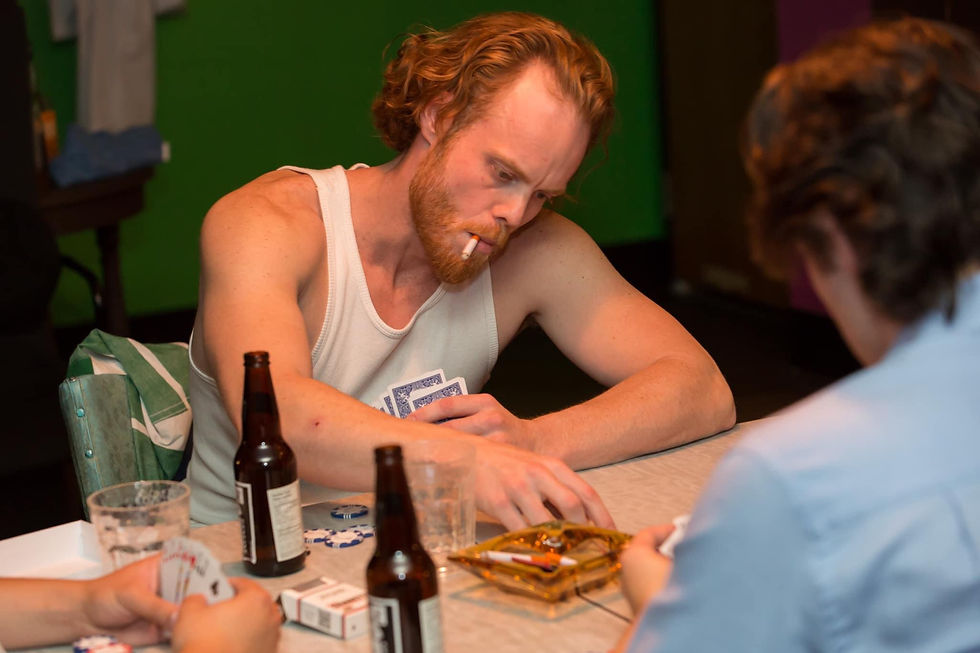
Live theatre has existed for millennia but in its modern Western form it has existed for 400-500 years. Ben Johnson, William Shakespeare and the English theatre renaissance got the ball rolling again in "the West" after the middle ages. Tennessee Williams, Sam Shepard and Virginia Woolf were stewards in mid-century America. In every iteration for the past handful of centuries, and beyond the theatre has persisted.
What's more is that it hasn't persisted because of more elaborate costumes, sets, stories, etc. It has persisted because of the social value, cathartic experience and, above all else, the meaning it brings into the lives of a person and their community.
The social format of theatre is completely different than the cinema of today.
Let's take a look.

At the theatre you often elevate your normal dress code, prepare and arrive early to both avoid being locked out, but also to connect with other citizens, artists and friends. There is no arcade or fun zone to distract everyone. Sure there is a bar and some modest snacks but not an 18 panel menu. You are encouraged to engage with the other patrons. Even those you don't know - yet. People are forced to exist in a space with each other which usually results in discussion - both welcome and unintended. Communities grow, relationships blossom, the culture breathes.
This creates a communal experience, a group of individuals in the same space sharing and managing a social experience. No escape into a racing arcade game or 15-20 minutes spent staring at a snack menu with way too many options then waiting another 15 minutes for your drink and burger combo alone in a line or maybe with a friend.
A theatre experience is generally different and more culturally and socially robust than at the cinema. At the theatre people come to engage with humans, performers and community members in person. There's often talkbacks and interactivity built in. Not at the cinema.
At the cinema many arrive in hopes of escaping their daily lives and soothing themselves. Often this escapism and soothing is somewhat anti-social when compared against a common theatre experience. It's a more selfish experience. There is still social activity at the cinema but the depth of it is greatly subdued compared to theatre. Often you arrive on a date or with a group of friends and the evening is focused on that social group, not so much on others. The theatre is different. So why is cinema dying?

The short explanation is that live theatre still holds a social currency. Being there, then with those people has meaning as both a shared social and cultural experience and as a more beneficial neurochemical experience. The science is clear that in real life when experiencing community in person we have a more robust neurochemical profile than we do at home alone. This increases memory, a sense of belonging and well-being and so much more.
The cinema lost this communal etiquette somewhere along the way and just look at what it has become.
The grandparent that live theatre is to cinema is looking down on its descendant with a bewildered and disappointed frown.
So how can we fix it? Can we save the cinema from dying?
I think we can but one more important thing first.
VIEWS, ENGAGEMENT, VALUE, Attention
So long as you haven't been living under a rock or in an Amish community somewhere these past 20 years you've probably heard people talk about "views, engagement, value and, of course, ATTENTION.
Attention is the new gold. Or so they'll have you believe.
The simple math is that attention = money, but is that necessarily true?
I mean... it's built into the phrase itself. "PAY attention." Some executive saw that a while back and was like... "What if we actually made them pay us - with attention?" And now we're here. So thanks for that, whoever you are.
Anyways, attention is great and all but most of society is talking about attention like it's the endgame when, if you really look at it, there is something deeper happening here.
A business wants people to pay attention to them as much as possible so they can have a captive audience to sell to. On the other side, people "pay" attention to businesses, brands, stories and the like because they have a product, service or narrative that solves or reduces a pain point in that unique person's life. So attention isn't the goal that advertisers, brands, films, etc. need to be focused on. The real thing that is happening in every potential customer's mind is this - does this product, service, person, story etc. add value to my life in some way? So value is the answer, right? Wrong! But we're almost there.
Some wise folks out there figured out a while ago that value is a major facet of the sales game. The more they focused on bringing value to customers the more money they made so "value" became a keyword in sales training worldwide, but things don't stop there either. There are more layers to this equation that guide every human on the planet when they make any purchase. Meaning, transformation and coherence.
Value is only a piece of the puzzle
Value is actually a substrate of meaning. If something means nothing to you it has no value to you and you won't invest time, money, energy or anything else into it. The more it means to you the more value it holds. Value is, therefore, the quantification of meaning. The words are seemingly synonymous but hold slight distinctions.
In other words, value is the dollar amount you're willing to pay in exchange for meaning.
Somehow the process of widdling meaning down into attention has caused a great majority of us to forget that meaning is even part of the equation at all. Most stop at "value" and call it a day.

So if we know that the greater meaning a thing has in a person's life the more value they will ascribe to it and, therefore, the more engagement, attention and money they will be willing to pay to access it, then it seems clear that the cinema lacks "meaning" for audiences these days. Because... they ain't payin'.
The question then becomes... How do we cultivate more meaning for cinema audiences? Or more prescient, how do we create more meaning at the cinema than streamers can provide in homes?
I'll admit, when I started writing this blog I was set on the idea that "meaning" is the actual root of things but as I wrote another level became clear. Coherence. Here's the idea... and it's not a new one.
Tony Robbins talks about how one of the strongest forces in a person's life is the need (and instinct) to remain consistent and coherent with our perception of ourselves. I tend to agree.
So, if value is the quantification of meaning, I had to ask... where does meaning come from? What is meaning? Short answer - Meaning is the story we believe about ourselves.
The more an experience enables us to adhere to (or create coherence with) what we believe is our most fulfilling life story, the more meaning, and, therefore, the more value it has to us personally, which means we'll likely engage with and invest in it more - whatever it is.
Said another way... the more positive subjective transformational power(s) a thing offers, the more of a person overall life they're willing to invest in it.
Here's the rub... Cinema is no longer as transformational. It's transactional.
And therein lies the problem.
There is a solution. hear me out.
The answer is simple but it isn't easy.
We must reimagine the transformational power of the cinema, craft more intentional and practical social currency and focus our efforts on cultivating profound meaning through the cinema that outweighs the perceived value of staying home and binging Prime. That is... 'if' we want cinema to survive.
Eventually, cinema's WILL close their doors for good if they can't offer appropriate value, meaning and transformation to their audiences.
But what does a more transformational cinema look like? Who and/or what is being transformed exactly?

Consider this... Matt Damon and Ben Affleck's new film "The Rip" has landed a groundbreaking deal to provide a stake (or a percentage) of the film's earnings to each member of the cast, crew and overall team. That's 1,200 people that are receiving a stake in the film. Not just contract pay.
This means a few things.
The whole team now has a rightful and AUTONOMOUS stake in the success of the film. Not just 20 executives trying to capitalize on over 1000 people's work. That wealth will now be spread amongst film technicians, performers and more, raising the tides for all 1,200 individuals and the immediate industry as a whole. I can get onboard with that.
This vested interest will, undoubtedly, lead to efforts from all or many of the 1,200 individuals to maximize the reach, impact and meaning the film has. Now you've got 1,200+ sales reps instead of 5. You've got community builders, speakers and champions of the film for life.
This model is one key to the survival of cinema.
Another thing this means is that when an audience goes to see "The Rip" they know, or at least some do, that their hard earned money is going to the little guy too. The one that actually did the work. Not just Harvey Weinstein and his cronies sitting in their low security penthouses with money rakes.
So we've already affected the meaning for the filmmaker and the audience with this approach, but it's still not enough social currency to overcome the meaning/value gap that streaming solves. We have to go further. We have to make going to the cinema the undeniable choice versus staying home. But how...?
By creating robust and memorable experiences at the cinema that deliver social currency and meaning to audiences which is impossible to receive at home.
The new age of cinema
For too long cineplexes have been trying to compete with streamers by playing the streamers game. This has to end. Streaming is not cinema and we shouldn't want it to be.
Theatres need to stop trying to be better than streaming and need to start trying to be different.
Imagine this...
All 1,200+ team members from "The Rip" go on tour. Each department travels around the continent and the world independently, arriving early to the cinema to meet and engage the community. Each department draws a diverse crowd ready to learn from and connect with: the cast, the creative team, the VFX department, the hair and makeup department, the sound department, etc.
After the screening there are artist talks where interested parties can learn about the craft that delivered the film they just saw from the people who made it. Each visit builds connections and communities with working industry professionals. Everyone learns, everyone grows. People stay at the cinema 25-50% longer. They buy more drinks and food to sustain the experience. The film's life is extended in cinemas to accommodate more department talks. What's more is the more folks each department gets out to the cinema the more financial return they receive directly in their wallets. It's a much more self-sustaining system than the currently dying studio-box office system.
What if we adopted this new broad ownership model, where all teammates have a stake in the success of the film?

So many things could come from this. Knowledge sharing, community building, fandom cultivation, deeper more immersive storytelling, improved memory, improved social well-being, greater shared communal experiences resulting in healthier neurochemical profiles that support the transformation of healthy communities and so much more. Plus more time spent at the cinema means more dollars for the cineplexes as well.
Taking the lead from live theatre, cinema needs to return to the culture and community that it seeks to influence, participate in and capitalize from, if it ever aims to return to a healthy state.
The answer to the woes of the cinema in 2026 and beyond isn't more spectacle, bigger budgets, more sugar, more consumption. The answer is: more meaning, through transformational cinema visits that cannot be accessed on the couch.
Transformation is good
This new approach means that some things will need to change. The cinema will need to transform a bit as well. New infrastructures, community spaces (pubs, lounges, stages), policies and technical considerations need to evolve to accommodate the interactivity of these types of events and approaches. This evolution itself will put people to work.
A new, or perhaps just renewed, way of and reason for attending the cinema is the only way it will survive. One that delivers memorable, tangible, meaningful and transformational experiences; practical social currency and fosters genuine community growth for audiences.
The alternative is don't change and close the cinemas.
Conclusion
It's clear as day to me.
We need to get out of our own way as filmmakers and cinema goers. Stop depending on some saviour, some executive, some festival to find us and make our dreams come true. We must claim our creative and human right to share our stories and get better at making our films really matter to people.
Water matters.
Air matters.
Food matters. We need it to survive.
We also NEED community, connection, transformation and purpose.
The cinema can deliver that, if we just get out of our own way and get down to what really matters.


Comments